24 Sep, 2026

Protecting beds, stretchers, chairs and other care surfaces is a daily priority in hospitals, nursing homes and home-care settings. However, choosing an underpad should involve more than picking the biggest pack or the lowest price. The right product helps caregivers manage moisture efficiently, supports patient comfort and simplifies housekeeping routines.
Use this practical checklist from ZP Mediheal before placing your next underpad order.
1. Start with the care setting and level of use
First, identify where and how often the underpads will be used.
For example, a lightly used chair or examination table may need a different level of protection than a hospital bed used by a patient with frequent incontinence. Consider:
- Frequency and volume of fluid exposure
- Whether the patient is mobile, semi-mobile or bedbound
- The size of the protected surface
- Expected changing frequency
- Whether the pad is for home care, a ward, ICU, nursing home or outpatient clinic
Selecting an underpad based on the real care requirement helps avoid two common problems: leaks caused by insufficient absorption and unnecessary expense from over-specifying every patient area.
2. Check absorbency—not just the word “heavy”
Absorbency is one of the most important purchase criteria, but terms such as light, moderate and heavy can vary between suppliers. Ask for a clear absorbency specification in millilitres, along with details of how the product is constructed.
For higher-use situations, look for an absorbent core that retains liquid effectively and helps keep the upper surface more comfortable for the patient. For occasional protection, a lower-capacity option may be more practical and economical.
ZP Mediheal offers customised underpad absorbency options ranging from 300 ml to 1,000 ml, allowing buyers to match product capacity to the intended use rather than relying on a one-size-fits-all approach.
Buyer tip: Test samples in actual conditions before committing to a bulk order. A pad that performs well during a short demonstration may behave differently during overnight or high-volume use.
3. Choose the correct size for coverage and comfort
An underpad that is too small can leave the mattress or chair exposed. One that is excessively large can bunch up, shift during repositioning or create unnecessary material waste.
Measure the area that needs protection and consider the patient’s movement. The pad should provide enough coverage beneath the hips and torso without folding or gathering under the body.
ZP Mediheal provides customised dimensions, with lengths of 45 cm, 60 cm, 90 cm, 150 cm and 180 cm, and widths of 60 cm or 80 cm. This flexibility can help hospitals standardise products across beds, examination couches and other care surfaces.
4. Examine the layers and surface design
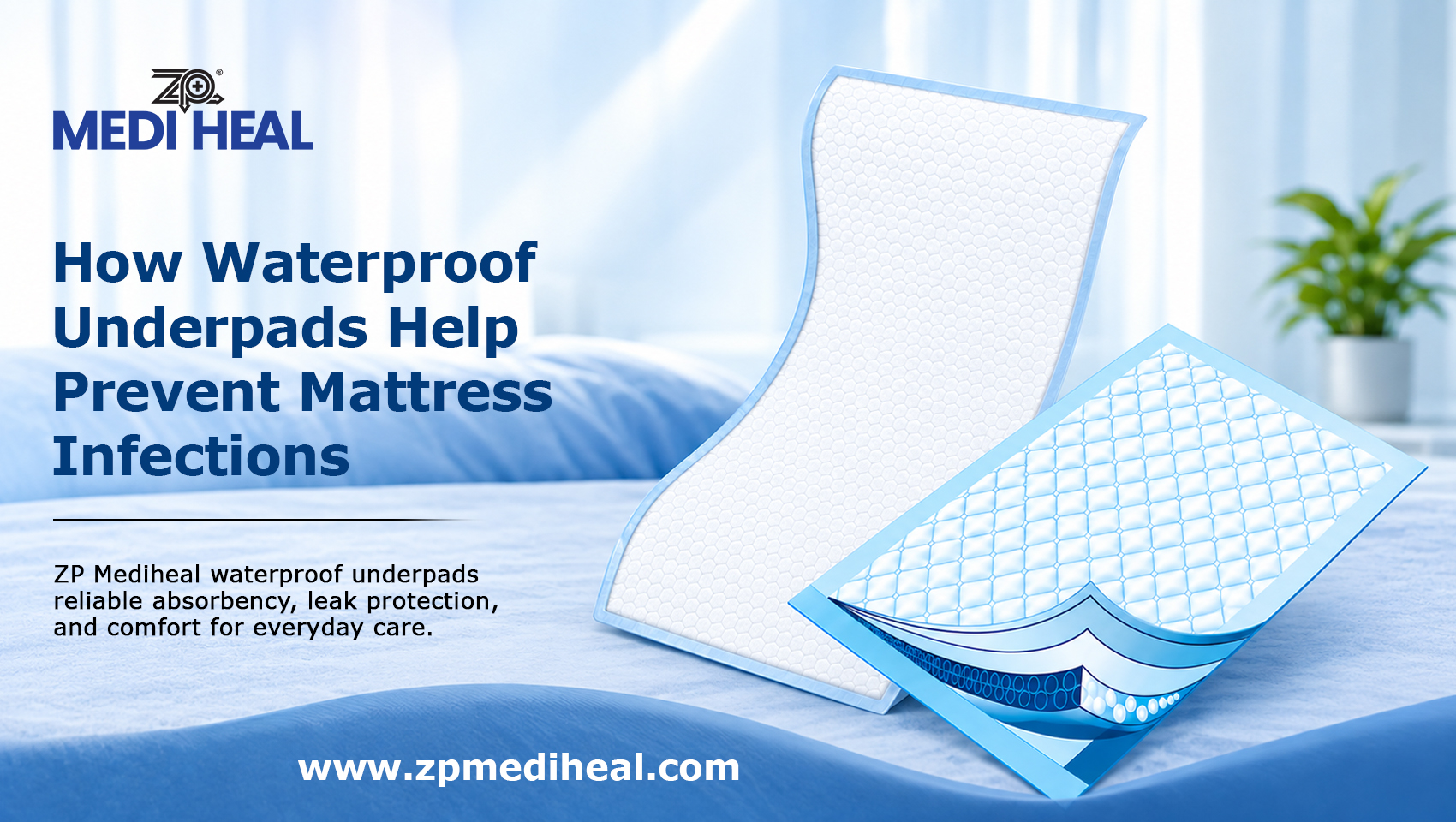
A dependable underpad is not simply an absorbent sheet. Its design should balance fluid control, patient comfort and handling convenience. When comparing options, ask about:
- Top layer: Is it soft and suitable for contact with sensitive skin?
- Absorbent core: Does it distribute and retain fluid effectively?
- Back layer: Does it help protect the mattress, linen or furniture underneath?
- Embossing: Can the pattern support more even fluid distribution?
- Adhesive options: Are corner adhesives needed to help keep the pad in place?
For organisations requiring a distinct product format or branding, ZP Mediheal also offers customisation options such as embossing patterns, printed PE backsheets, multiple backsheet colours and adhesive release paper at all corners.
5. Prioritise patient dignity and skin-care routines
Underpads are useful tools for managing moisture, but they are not a replacement for timely personal care, skin assessment or repositioning protocols. Prolonged exposure to moisture can contribute to skin irritation and breakdown, especially for patients with limited mobility.
Care teams should change soiled pads promptly, cleanse and dry the skin appropriately, and follow the facility’s pressure-injury prevention procedures. Avoid layering multiple pads beneath a patient unless clinically indicated, as extra layers may affect comfort and heat or moisture management.
6. Review hygiene, handling and disposal procedures
Disposable underpads can support practical hygiene workflows when used correctly. Staff should wear appropriate personal protective equipment when exposure to body fluids is anticipated, perform hand hygiene after removing gloves and dispose of used pads according to the hospital’s biomedical-waste policy and local regulations.
Hospitals should also ensure that staff know:
- Where clean pads are stored
- How to prevent clean stock from contacting soiled linen or surfaces
- When a pad must be changed
- How to dispose of used pads safely
- Which product is assigned to each department or care situation
Consistent training matters as much as product selection.
7. Verify quality documentation and supplier reliability
For hospitals and institutional buyers, product consistency is essential. Before finalising a supplier, request specifications, sample packs, batch information and relevant quality documentation.
ZP Mediheal states that its underpads are manufactured under ISO 13485:2016 and ISO 9001:2015 quality-management systems, and conform to ISO 17786 and ASTM D882 requirements. Buyers should confirm the documentation relevant to their purchase and their facility’s procurement standards.
Also check pack configuration and logistics. ZP Mediheal underpads are available in retail packs of 10 pieces, with outer packaging options including corrugated boxes or LDPE bags as required.
Final Checklist Before You Buy
Before approving an underpad purchase, confirm:
- Required absorbency level
- Suitable pad dimensions
- Patient comfort and surface protection needs
- Material and layer construction
- Adhesive or customisation requirements
- Quality documents and sample-test results
- Pack size, storage space and replenishment schedule
- Staff training and disposal procedures
The best underpad is one that fits the patient, the care environment and the workflow. With the right balance of coverage, absorbency, comfort and reliable supply, caregivers can spend less time managing leaks and more time focusing on patient care.
Recent Posts