11 Nov, 2026
Buying disposable underpads in bulk is not simply a procurement task. It is a decision that affects patients, caregivers, retailers, hospitals and the reputation of the business supplying them. When an underpad does not perform properly, the consequences are immediate: bedding may need to be changed, caregivers face additional work, and customers may lose faith in the supplier.
For this reason, businesses should look beyond a catalogue image or the cheapest quote while selecting a manufacturer. The right partner should be able to provide a product that performs reliably, arrives as promised and remains consistent from one shipment to the next.
Begin With the End User in Mind
The first question should be: who will use these underpads?
A nursing home may need products suitable for regular overnight care. A pharmacy may require consumer-friendly packs for home use. A hospital buyer may focus on hygiene, stock availability and ease of handling. A distributor may need several variants to serve different regions and customer groups.
Knowing the final use helps determine the right specifications. It also prevents a common purchasing mistake ordering a product that is inexpensive but unsuitable for the actual purpose.
Before requesting a quotation, prepare a simple requirement sheet covering the preferred dimensions, approximate absorption requirement, number of pieces per pack, total order volume and delivery destination.
Examine the Product, Not Just the Specification Sheet
A product description can sound impressive, but the actual underpad tells the real story. Always ask for physical samples before approving a large order.
Place the sample on a flat surface and observe whether it stays in position. Check the feel of the upper layer and inspect the reverse side for a properly formed moisture barrier. Look at the corners and edges too; loose bonding may affect performance during use.
The most useful sample test is practical rather than visual. Assess how quickly fluid moves into the pad, whether it spreads excessively and whether the lower layer keeps the surface protected. A pad that looks thick is not automatically more effective; the quality of its internal construction matters more.
Ask What Goes Into the Underpad
Manufacturers do not need to reveal confidential processes, but they should be able to explain the basic materials used in their product.
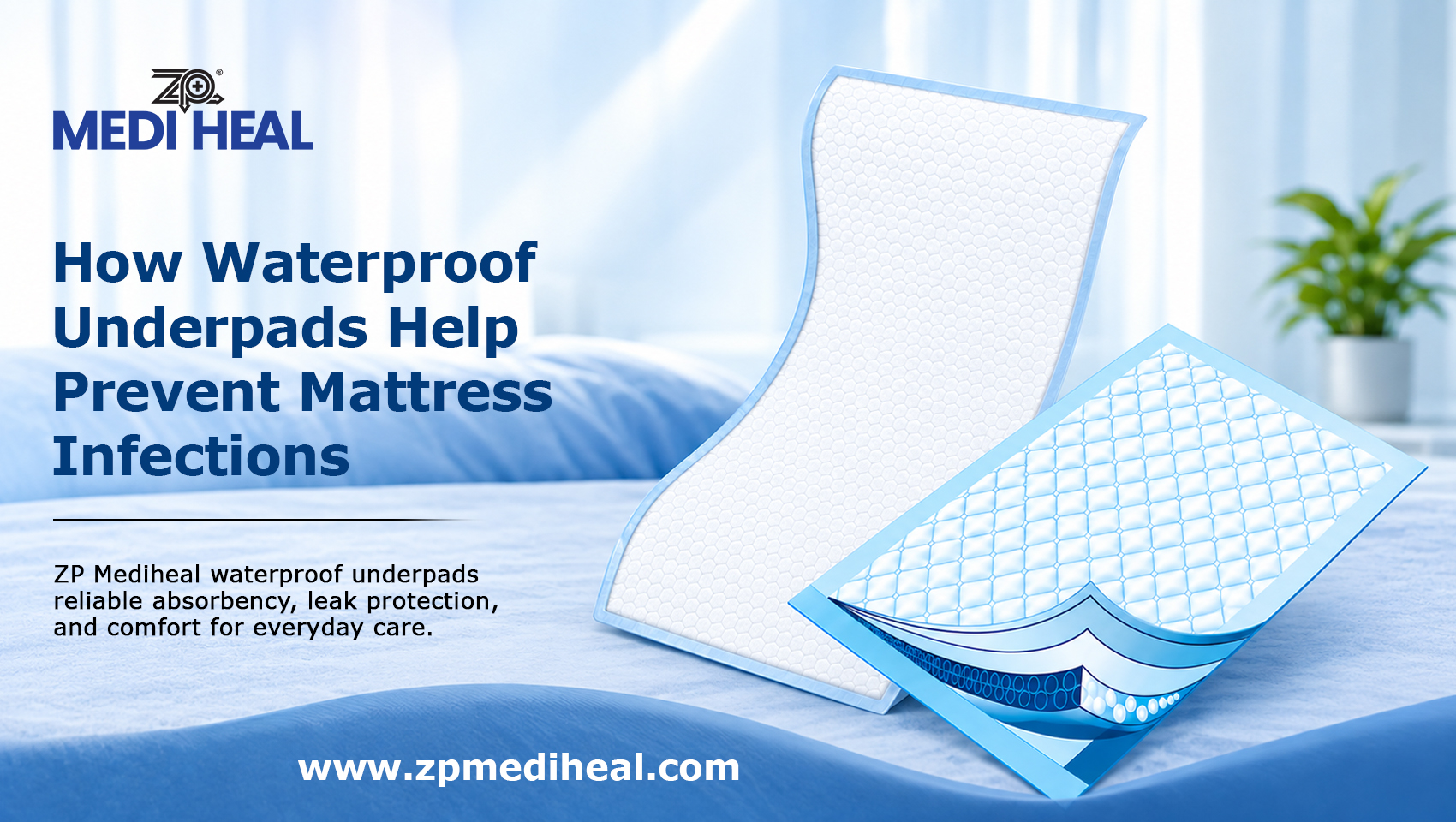
A disposable underpad generally relies on three working sections: a skin-facing layer, an absorbent centre and a protective base. The top portion should feel comfortable and permit fluid to move downward. The middle section should hold moisture effectively. The bottom layer should help prevent transfer onto a mattress, chair or examination surface.
If a supplier cannot explain the product clearly, provides vague answers or avoids sharing basic specifications, consider it a warning sign. Good business partnerships start with clarity.
Check Whether Quality Will Remain Stable
An excellent sample is useful, but bulk buyers need assurance that future lots will match it. Inconsistent manufacturing is one of the biggest risks in hygiene-product sourcing.
Ask how the manufacturer checks finished products before they are packed. Find out whether they monitor dimensions, material quality, pack count and overall product finishing. It is also helpful to ask how they handle complaints or replacement requests if a shipment does not meet agreed specifications.
A supplier that has clear checks in place is more likely to protect your business from unpleasant surprises later.
Do Not Ignore Supply Reliability
A product is of little value if it does not reach you when your customers need it. Hospitals, care centres and distributors often operate on planned inventory cycles, so missed dispatch dates can disrupt the entire supply chain.
Discuss the manufacturer’s usual turnaround time before placing an order. Ask whether they work from available inventory or manufacture only after confirmation. If you expect regular orders, share your approximate forecast so the supplier can plan production accordingly.
A reliable company will provide realistic commitments. Be cautious of unusually fast promises that are not supported by clear production or dispatch information.
Consider Packaging as Part of Product Quality
Underpads can lose their value if packaging is weak or damaged in transit. Packaging should keep the product clean, presentable and protected while it moves through warehouses, transport vehicles and retail shelves.
Review both the consumer pack and the master carton. Check whether the pack clearly states the size, quantity and essential product information. For wholesalers and brand owners, custom packaging can also be a valuable option.
If you intend to sell under your own label, discuss branding requirements early. Private-label projects may involve artwork approval, packaging minimums and additional lead time. Addressing these details at the beginning makes the process smoother.
Choose a Manufacturer That Communicates Clearly
Many supply problems begin with poor communication rather than poor products. A dependable manufacturer should reply to questions directly, provide written quotations and confirm specifications before production begins.
Pay attention to how the supplier handles the initial conversation. Are they responsive? Do they answer technical questions properly? Are price, taxes, packaging, delivery and payment terms clearly explained?
Professional communication during the enquiry stage is often a good indication of how the company will manage your actual order.
The Right Partner Supports Long-Term Growth
The best manufacturer is not necessarily the one offering the lowest rate. It is the one that helps you supply a dependable product, maintain customer confidence and manage orders without constant uncertainty.
Take time to compare samples, review capabilities and verify communication standards. A careful decision at the start can lead to a much stronger business relationship in the future.
ZP Mediheal is committed to supporting healthcare and hygiene needs with dependable product solutions. To explore more, visit ZP Mediheal.
Recent Posts